
Outdoor kitchens for Minneapolis & the Twin Cities
Outdoor Kitchens in Minneapolis, MN
Grill islands, countertops, covers and fire features built to get through a Minnesota winter and be ready when the cooking season starts.
- Free on-site estimates
- Line-by-line written pricing
- Every layout planned for Minnesota winters
An Outdoor Kitchen That Survives January
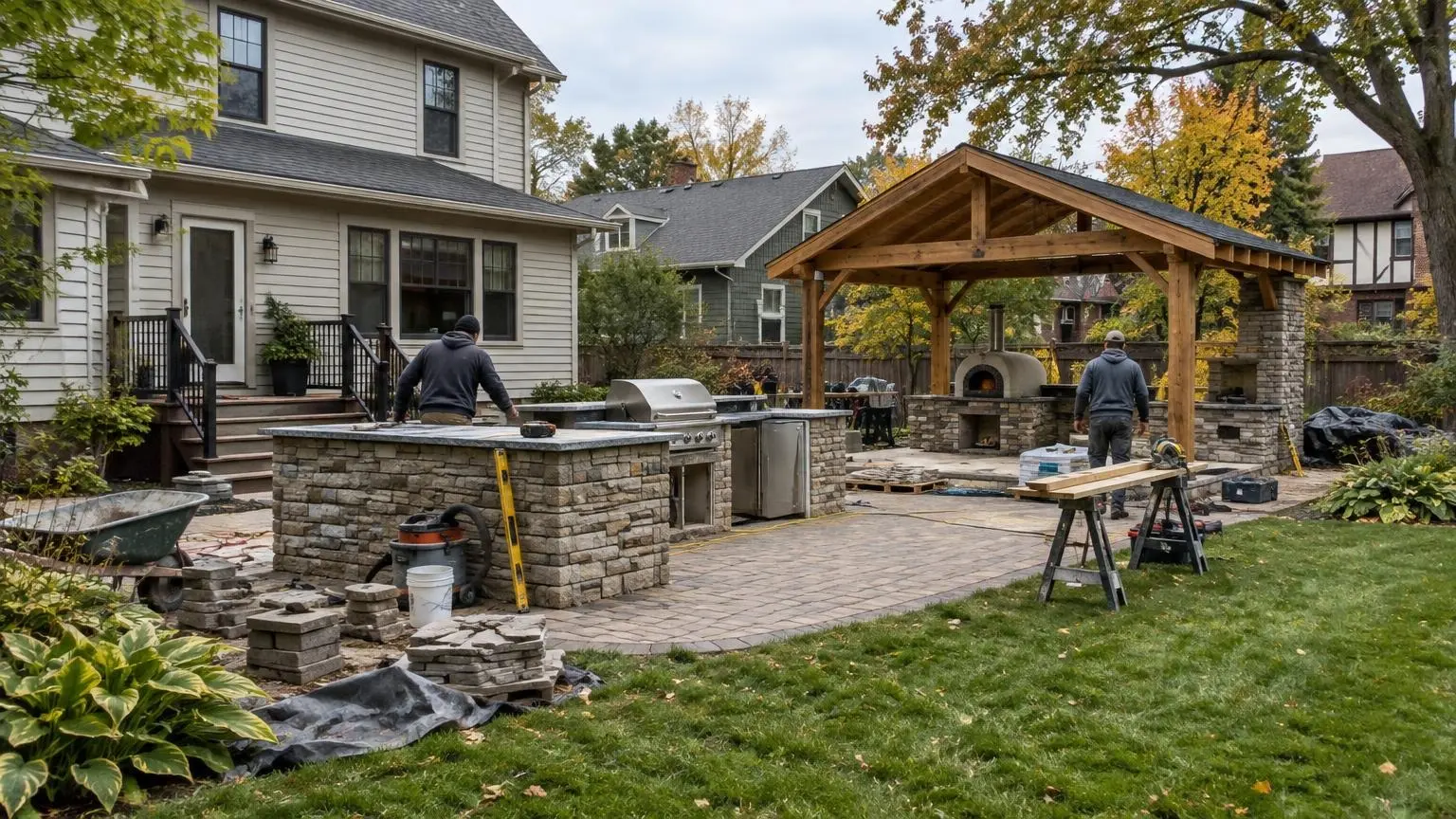
Outdoor kitchens in Minneapolis have to do two jobs: make the most of a few warm months and then sit through a long, hard winter without cracking, heaving or splitting a pipe. Minneapolis is classed as a hot-summer humid continental climate. Using 1991-2020 normals from MSP airport, July highs average about 83°F, January's daily mean sits near 16°F, and snowfall averages roughly 51 inches per winter. An island that looks great in June has to cope with ice in its joints, snow piled on its top and frozen ground pushing up under it. Planning for that from the start is what separates a kitchen that lasts from one that needs repairs after its second spring.
Start with what is underneath
Frozen soil expands, and anything resting on it can lift and drop unevenly. Minnesota's building rules set a minimum footing depth of 3-1/2 feet for Hennepin County, and the City of Minneapolis asks for footings at least 42 inches below grade on decks. A freestanding island does not always need deep footings, but it does need a base that will move as one piece: a properly built slab or a well-compacted, well-drained paver base sized for the weight of masonry, stone and a grill. Roofs and pergola posts are another matter; they generally go on frost-depth footings. We check the existing patio or deck before building on it, because a cracked slab or a deck not framed for the load will pass its problems on to the kitchen.
Materials that tolerate freezing
Water that soaks into a material and then freezes is what breaks it apart. That is why we steer away from porous stone, tile with many grout lines and soft site-made concrete on exposed countertops, and toward dense granite, sealed and maintained, or outdoor-rated porcelain slabs. Caesarstone, for example, says its porcelain resists UV and can resist cracking in freezing temperatures. Veneer stone, mortar and caps get the same scrutiny, and countertops are set with a slight overhang and drip edge so meltwater runs off instead of into the island.
Plumbing you can winterize
A sink, ice maker or beverage line is the part of an outdoor kitchen most likely to cause trouble. Manufacturer guidance is clear that water must be drained from supply lines and faucets before winter. Kalamazoo Outdoor Gourmet, for example, tells owners to shut off supply valves, open the drains and blow out the lines with compressed air, and to winterize ice makers before it drops below 45°F. We lay out supply lines with an accessible shutoff inside the house, slope drain lines and place valves where you can reach them, so the fall shutdown takes minutes, not a service call.
Gas, power and permits
Most built-in grills here run on natural gas piped from the house, though propane is an option where there is no gas service. Gas piping, new outdoor circuits for refrigerators, lights and outlets, and water and drain lines are generally permitted and inspected work, and a roof over the cooking area usually needs a building permit. Zoning setbacks apply too; the City of Minneapolis deck permit guide tells homeowners to call 311 about setbacks before preparing plans. Rules vary between Minneapolis and each suburb, so we check with the permit office that covers your street and allow time for inspections in the timeline.
Fire features and city rules
Minneapolis limits wood-burning recreational fires to under 3 feet wide and 2 feet high, at least 25 feet from buildings and flammable material, between 9 a.m. and 10 p.m., with winds under 10 mph and natural cut wood only. Those rules shape where a wood fire pit can go on a city lot. A gas fire table or a properly built outdoor fireplace is often the more practical choice in a tight yard, and we review clearances with you before anything is designed.
The building season is short
Masonry, concrete and footings need unfrozen ground and workable temperatures, so most outdoor kitchen construction here happens between spring thaw and late fall. Permits, appliance lead times and countertop fabrication all take weeks. If you want to cook outside by early summer, the best time to start planning is late winter; projects planned in summer often finish in fall and get their first real use the next year.
What we look at during the estimate
- The patio, deck or lawn the kitchen will sit on, and how it drains
- Distance to the gas meter, electrical panel and an interior water shutoff
- Clearances from siding, windows, eaves and trees for the grill and any fire feature
- Sun, wind and where smoke will drift relative to the house and neighbors
- Which appliances you want and which ones need winter care
- Likely permits and zoning setbacks for your address
Our Outdoor Kitchen Services
Six services cover a complete outdoor cooking area, from the island and countertop to the roof overhead and the fire beside it.
Custom Outdoor Kitchens
A complete cooking area designed around your yard, your appliances and a Minnesota winter.
Learn more →Outdoor Kitchen Countertops
Granite, porcelain and other surfaces chosen to come through freeze-thaw cycles in one piece.
Learn more →Grill Islands & BBQ Stations
Built-in grill islands sized for your grill, with landing space, storage and a base that will not shift.
Learn more →Outdoor Kitchen Cabinets
Stainless, polymer and masonry storage that stays dry, closes tight and does not swell or rust.
Learn more →Covered Outdoor Kitchens & Pergolas
Pergolas, louvered roofs and solid-roof pavilions over the cooking area, on frost-depth footings.
Learn more →Outdoor Fireplaces & Fire Features
Gas fire tables, fire pits and outdoor fireplaces placed to meet city fire rules and clearances.
Learn more →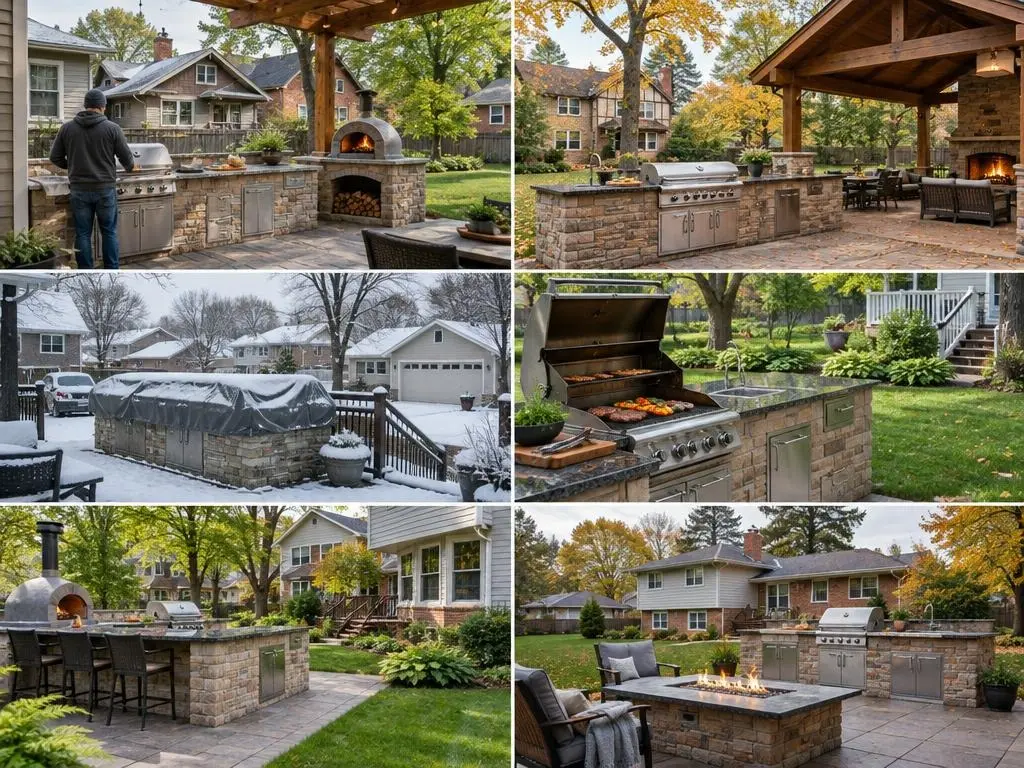
Why Homeowners Call Outdoor Kitchens Minneapolis
Designed for frost
Bases, footings and drainage are planned for frozen ground, so the island stays level and the countertop stays in one piece.
Winter-ready plumbing
Accessible shutoffs, drain valves and sloped lines make the fall shutdown quick and keep pipes from splitting.
Permits planned in
We identify gas, electrical, plumbing and structure permits up front and build them into the schedule.
One written price
Every line of the proposal is itemized, and extra work happens only after you sign a change.
Where We Work
Minneapolis is home base, from the bungalow blocks of Longfellow, Nokomis and Northeast, where a kitchen often has to fit between a back door and a detached garage, to larger lots near the chain of lakes and the parkways. Beyond the city limits we work in Saint Paul and in suburbs including Edina, Minnetonka, Wayzata, Orono, Excelsior, Shorewood, Eden Prairie, Plymouth, Maple Grove, Chanhassen, Prior Lake, Lakeville, Mendota Heights, Woodbury, Stillwater and North Oaks. All of them fall in the same 3-1/2 foot frost-footing zone under Minnesota's building rules, but each city sets its own permit process, setbacks and rules for recreational fires, and some neighborhoods add homeowners association review on top. The individual town pages explain local differences, and your plan is checked against your own city's requirements before it is finalized.
- Outdoor Kitchens in Minneapolis, MN
- Outdoor Kitchens in Saint Paul, MN
- Outdoor Kitchens in Edina, MN
- Outdoor Kitchens in Minnetonka, MN
- Outdoor Kitchens in Wayzata, MN
- Outdoor Kitchens in Orono, MN
- Outdoor Kitchens in Eden Prairie, MN
- Outdoor Kitchens in Plymouth, MN
- Outdoor Kitchens in Maple Grove, MN
- Outdoor Kitchens in Lakeville, MN
- Outdoor Kitchens in Woodbury, MN
- Outdoor Kitchens in Stillwater, MN
- Outdoor Kitchens in Chanhassen, MN
- Outdoor Kitchens in Excelsior, MN
- Outdoor Kitchens in Prior Lake, MN
- Outdoor Kitchens in Shorewood, MN
- Outdoor Kitchens in North Oaks, MN
- Outdoor Kitchens in Mendota Heights, MN
Common Questions
What does installing an outdoor kitchen cost in the Twin Cities?
Published cost guides place the bulk of projects somewhere from roughly $6,000 up to $35,000. HomeGuide's 2026 numbers: modular kits at $7,000 to $16,000, custom work at $10,000 to $35,000. HomeAdvisor reports a typical spend near $16,500. Gas, water and electrical runs, a roof and higher-end appliances push the total up. Your own number comes in writing after we visit.
Are outdoor kitchens worth the money in Minnesota?
It depends on how much you cook outside. The season is shorter than in the South, but a covered kitchen with a heater or fireplace stretches it from early spring well into fall. The value comes from building it so it does not need repairs every spring: a solid base, freeze-tolerant materials and plumbing you can drain.
Can an outdoor kitchen stay outside all winter in Minneapolis?
The structure can, if it is built for it. Masonry islands, granite or porcelain tops and stainless grills stay in place, ideally under a cover. Water lines, sinks and ice makers must be drained and blown out before freezing weather, and refrigerators are emptied and powered down when lows drop into the upper 30s, following the manufacturer's instructions.
Does a Minneapolis outdoor kitchen require a permit?
A freestanding island by itself may not, but the utilities usually do: gas piping, new electrical circuits and plumbing are generally permitted and inspected work, and a roof or attached structure typically needs a building permit and zoning review. We verify the requirements for your property before construction.
What countertop holds up best outdoors in Minnesota?
Dense, low-absorption surfaces do best through freeze-thaw cycles. Sealed granite and outdoor-rated porcelain are common choices. Tile with many grout joints and porous stone are more likely to crack or spall when water gets in and freezes.
What are the trends for outdoor kitchens in 2026?
Most of the current interest is in stretching the season: louvered or solid roofs above the grill, gas fire tables or fireplaces a few steps from the island, mounted heaters, good task lighting, and wood- or gas-fired pizza ovens. Porcelain countertops and stainless or polymer cabinets have also become common because they handle weather with little upkeep.
When should I start planning an outdoor kitchen?
Late winter is ideal. Design, permits, appliance orders and countertop fabrication take weeks, and construction needs thawed ground. Starting in February or March gives the best chance of cooking outside by early summer.
Get an Outdoor Kitchen Estimate
No-cost site visits for Minneapolis homes and nearby suburbs.